
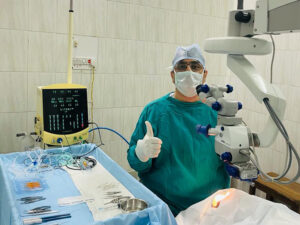


Diabetes is the root cause of many problems and eyes are also get affected badly by diabetes. Now get the best Diabetic Retinopathy treatment in Muzaffarnagar at Paras Netralaya. Our hospital is equipped with state of the art technology and lasers to handle retina related problems and our treatment outcomes are very positive. Several patients get cured of Diabetic retinopathy after treatment at Paras Netralaya.
Medical Retina
This service deals with conditions at the back of the eye, which are treated medically using drugs, eye drops or lasers, and includes diabetic eye screening. We feel proud to say that we are offering best diabetic retinopathy treatment in Muzaffarnagar.
What is Diabetic Retinopathy?
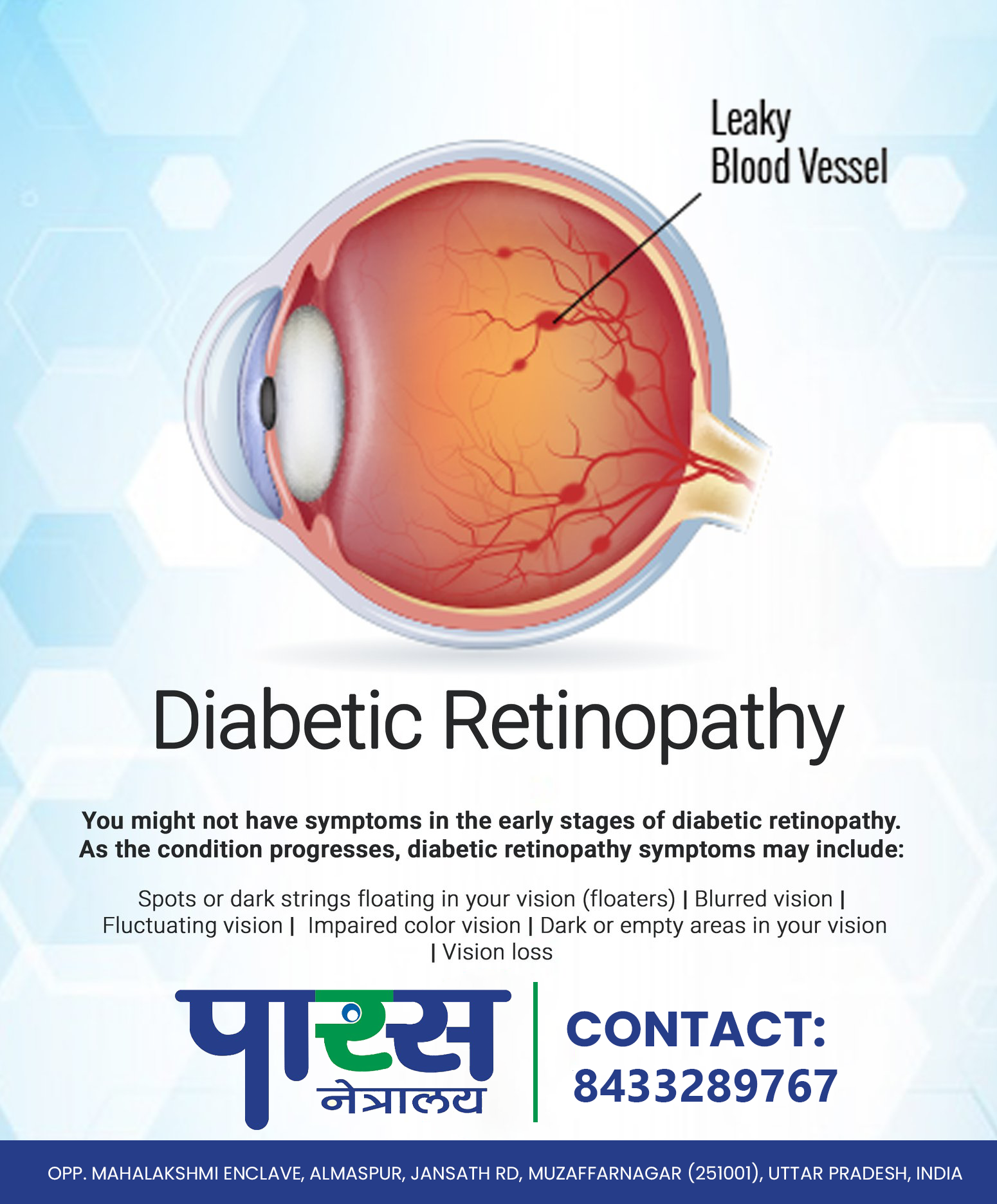
People with diabetes can have an eye disease called diabetic retinopathy. This is when high blood sugar levels cause damage to blood vessels in the retina. These blood vessels can swell and leak. Or they can close, stopping blood from passing through. Sometimes abnormal new blood vessels grow on the retina. All of these changes can steal your vision. It is the most common cause of vision loss among people with diabetes and the leading cause of vision impairment and blindness among working-age adults. However, early detection and treatment can reduce the risk of blindness by 95 percent

Causes of Diabetic Retinopathy
Chronically high blood sugar from diabetes is associated with damage to the tiny blood vessels in the retina, leading to diabetic retinopathy. The retina detects light and converts it to signals sent through the optic nerve to the brain. Diabetic retinopathy can cause blood vessels in the retina to leak fluid or hemorrhage (bleed), distorting vision. In its most advanced stage, new abnormal blood vessels proliferate (increase in number) on the surface of the retina, which can lead to scarring and cell loss in the retina.
Symptoms of Diabetic Retinopathy
The early stages of diabetic retinopathy usually have no symptoms. The disease often progresses unnoticed until it affects vision. Bleeding from abnormal retinal blood vessels can cause the appearance of “floating” spots. These spots sometimes clear on their own. But without prompt treatment, bleeding often recurs, increasing the risk of permanent vision loss. If DME occurs, it can cause blurred vision.
When we work
Opening Hours


Dr. Sumeet Jain
Eye Specialist | Cataract Surgeon
25+ Years Experience
What is diabetic macular edema (DME)?
DME is the build-up of fluid (edema) in a region of the retina called the macula. The macula is important for the sharp, straight-ahead vision that is used for reading, recognizing faces, and driving. DME is the most common cause of vision loss among people with diabetic retinopathy. About half of all people with diabetic retinopathy will develop DME. Although it is more likely to occur as diabetic retinopathy worsens, DME can happen at any stage of the disease.
Myths About Medical Retina
MYTH : IF MY SUGAR IS WELL IN CONTROL I WILL NOT GET DIABETIC RETINOPATHY.
NO, EVEN AFTER CONTROLLED SUGAR LEVEL ,DIABETIC PATIENTS CAN DEVELOP RETINOPATHY AND IT IS DEPENDS UPON THE NO. OF YEARS OF DIABETES, SO REGULAR CHECH UPS ARE MUST.
MYTH : ONCE LASER HAS BEEN DONE FOR DIABETIC RETINOPATHY RETINOPATHY CANNOT INCREASE.
NO, IT CAN, STILL GO FOR REGULAR CHECK UPS.
MYTH : When should a patient get screened for diabetic retinopathy?
A type 1 diabetic should typically have an eye screening within 5 years of diagnosis of diabetes or at puberty if early onset. A type 2 diabetic should have the first screening at the time of diagnosis as many times the diabetes is detected late. This fact is often missed by treating physicians and in our country by the universal presence of quacks and unqualified doctors.Further checkups should be done according to the advice of a retinal specialist. Pregnant diabetic females should have a checkup before conception and once in each trimester and one examination 2 months post-delivery. What are the stages of diabetic retinopathy? Diabetic retinopathy has broadly two stages: Non-proliferative diabetic retinopathy (NPDR) and proliferative diabetic retinopathy (PDR). PDR requires active treatment. NPDR generally requires observation and strict glycemic control but may need treatment in the presence of macular edema.
MYTH : Is diabetic retinopathy reversible?
No. Once a particular stage of retinopathy has been achieved it is not reversible. However complications like macular edema, bleeding and retinal detachment can be treated.
MYTH : Is treatment of the eye enough to stop diabetic retinopathy?
This is a common misconception among patients that treatment of the ocular complication of diabetes is enough. As we know, diabetic retinopathy is a complication of diabetes mellitus and along with it other diseases such as high blood pressure, kidney disease, anemia, high cholesterol etc. A rigorous control and treatment of these systemic problems is also essential for good response to the eye treatment.
MYTH : I want a one-time solution for my diabetic retinopathy. Is it possible?
Again a common misconception is that a single shot of treatment is enough to treat diabetic retinopathy. Diabetic retinopathy treatment is not like cataract surgery. Patients have to understand that as they have to undergo lifelong treatment of diabetes similarly they may have to undergo repeated treatments for diabetic retinopathy as with the eye treatment we are only targeting the eye disease but diabetes itself is present for a lifetime.
MYTH : Will cataract surgery and lens implantation improve my vision if I have diabetic retinopathy?
Only if you really have cataract. Patients have a common misconception that implanting a lens inside the eye will solve all problems but it is not so. Infact diabetic retinopathy can worsen in some cases after cataract surgery.